

.png)
.png)



A social media manager plans, creates, and oversees content across platforms like Instagram, LinkedIn, TikTok, and Facebook. They handle posting schedules, community engagement, paid campaigns, and performance tracking to build brand presence and drive measurable business results.
The role varies between agencies, startups, and enterprise teams. Agency social media managers handle multiple client accounts with different brand voices, while in-house managers focus on one brand’s strategy and growth. Remote LATAM professionals now cover both roles, offering bilingual skills and timezone alignment at lower costs than U.S. hires.
Let’s break down what a social media manager actually does on a daily basis, from content creation to reporting.
What a Social Media Manager Actually Does (Agency & In-House)
A social media manager oversees a brand’s online presence, combining strategy, content creation, community management, and performance tracking. Agency managers typically handle several client accounts at once, adapting to each brand’s voice and coordinating with other specialists like designers or paid media teams.
In-house managers focus on a single brand, working closely with internal teams and often taking on both strategic and execution tasks within the company’s resources.
Both roles require staying up to date with trends, managing campaigns, and ensuring content aligns with overall business goals, though the scope and daily routines differ.
Daily Responsibilities
Social media managers handle three main areas every day: content execution, audience interaction, and performance monitoring.
These tasks repeat daily but the specifics change based on campaigns, trending topics, and audience behavior patterns.
Core Responsibilities in a Modern Marketing Team
Beyond daily execution, social media managers own several strategic functions:
- Developing monthly content calendars aligned with marketing goals and product launches.
- Running paid social campaigns with specific ROAS or CPA targets.
- Coordinating with designers, copywriters, and video editors for content production.
- Monitoring brand mentions and competitive activity across all platforms.
- Reporting weekly or monthly performance to marketing leads with actionable insights.
- Testing new formats like Reels, Stories, or LinkedIn newsletters to expand reach.
- Managing influencer partnerships and user-generated content programs.
The importance of these responsibilities grows with seniority. Entry-level managers execute under supervision, while senior managers set the strategy themselves.
How the Role Differs for Agencies vs. Startups
Agency social media managers often handle 3-8 client accounts at the same time. They switch between different brand voices, industries, and campaign objectives throughout the day. The volume is higher, but the depth per brand is limited.
Agencies typically assign one manager per client with oversight from a senior strategist. That manager handles content creation, posting, community responses, and basic reporting, while more complex strategy or crisis management escalates to team leads.
Startups and founders usually hire a single social media manager to handle everything. The manager develops the brand voice, creates content, manages ads, responds to customers, and reports directly to the CEO or marketing director. The role blends strategy and execution, with less specialization than agency teams.
Daily Tasks: From Content to Reporting
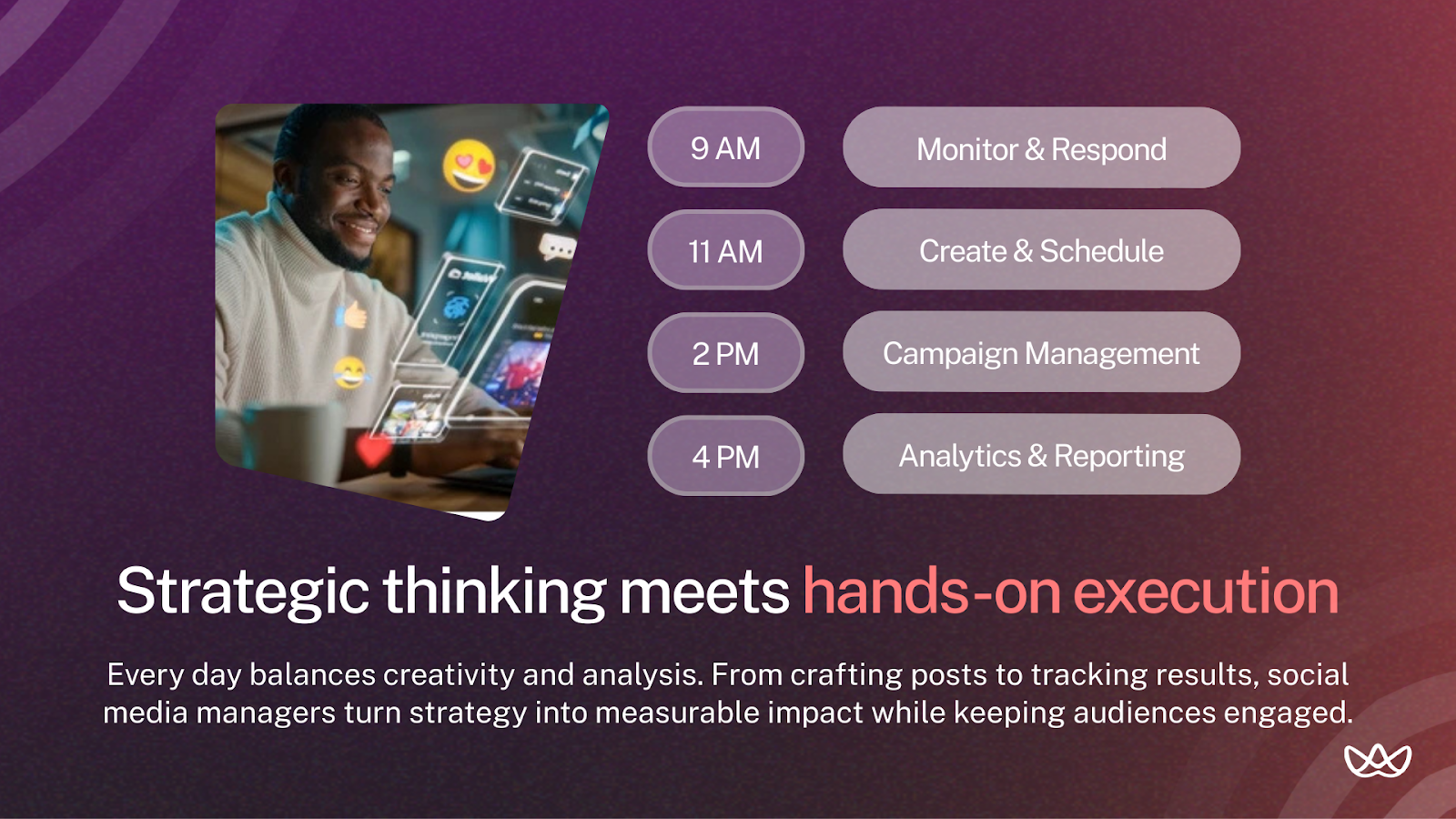
A typical day for a social media manager often looks like this:
- Morning: Check notifications, reply to comments, review performance.
- Mid-morning: Publish content, engage with accounts, track trends.
- Afternoon: Create or coordinate content - captions, briefs, short videos.
- Late afternoon: Monitor campaigns, adjust ads, prepare reports.
- End of day: Plan next day’s content, flag issues for review.
Schedules vary by audience. B2B managers on LinkedIn follow standard business hours, while D2C brands targeting younger consumers may post evenings or weekends. Crisis management, trending responses, and ad-hoc client requests often shift the plan, so flexibility is more important than rigid time blocks.
Key Skills Every High-Performing Social Media Manager Needs
High-performing social media managers need creative, strategic, and analytical skills to grow a brand and deliver results. Some of the key skills include:
1. Content Creation, Editing & Brand Voice
High-performing social media managers create content that fits the brand and works for each platform. Good content drives engagement and shapes how people see the brand, while poor content can hurt faster than posting nothing.
Why It Matters: Quality content builds trust and interaction with your audience.
Example: A B2B SaaS manager writes LinkedIn posts that simplify technical features, coordinates with designers on infographics, and edits short demo videos for Instagram Reels. They keep a consistent voice but adjust tone and format per platform. TikTok and Reels now require basic video editing - pacing, text overlays, trending audio, and hooks that grab attention.
2. Analytics, KPIs & Data-Driven Decision Making
Social media managers track performance and use data to improve content and campaigns. Numbers show what works, so managers can focus on what drives results and adjust what doesn’t.
Why It Matters: Data-backed decisions help grow reach, engagement, and ROI instead of relying on guesswork.
Example: A manager notices Instagram carousel posts get 40% more saves than single images. They add more carousels to the content calendar, boosting overall reach by 25% in two weeks. Metrics vary by business model:
- E-commerce: Click-through, conversion, revenue.
- B2B: Leads, downloads, demo requests.
- Brand awareness: Reach, impressions, share of voice.
- Community: Engagement, response time, sentiment.
Reports are shared weekly or monthly with context so decision-makers understand performance.
3. Community Management & Customer Care
Managers respond to comments, messages, and mentions while keeping the brand voice. Social platforms now double as customer service channels, so speed and tone matter.
Why It Matters: Slow or poor responses can damage the brand, while quick, thoughtful replies turn negative experiences into positives.
Example: A customer tweets about a delayed order. The manager responds within 30 minutes, shares support info, and follows up once resolved. Most brands aim for responses under 2 hours during business hours and under 24 hours outside them. Tone matters too - too formal feels robotic, too casual can seem unprofessional.
4. Cross-Channel Strategy & Campaign Execution
Managers coordinate content and campaigns across multiple platforms while keeping messaging consistent and adapting for each audience.
Why It Matters: Audiences behave differently across platforms. A post that works on LinkedIn may fail on TikTok.
Example: A product launch includes teaser content on Instagram Stories, detailed posts on LinkedIn, behind-the-scenes videos on TikTok, and customer testimonials on Facebook. Managers also repurpose content - turning a YouTube video into Reels, Twitter threads, and LinkedIn posts - so nothing is wasted.
Soft Skills That Impact Performance
Technical skills matter, but soft skills have a big impact over the long term:
- Communication: Brief designers, update stakeholders, escalate issues.
- Time management: Handle multiple deadlines and client requests.
- Adaptability: Adjust when algorithms or trends shift.
- Creativity: Solve problems within tight budgets or timelines.
- Bilingual skills: Reach both English and Spanish-speaking audiences, especially valuable for LATAM managers.
LATAM social media managers typically bring strong bilingual capabilities, making them valuable for brands targeting both English and Spanish-speaking audiences. This expands campaign reach without needing separate team members for each market.
Why Social Media Managers Matter for Agencies & Startups
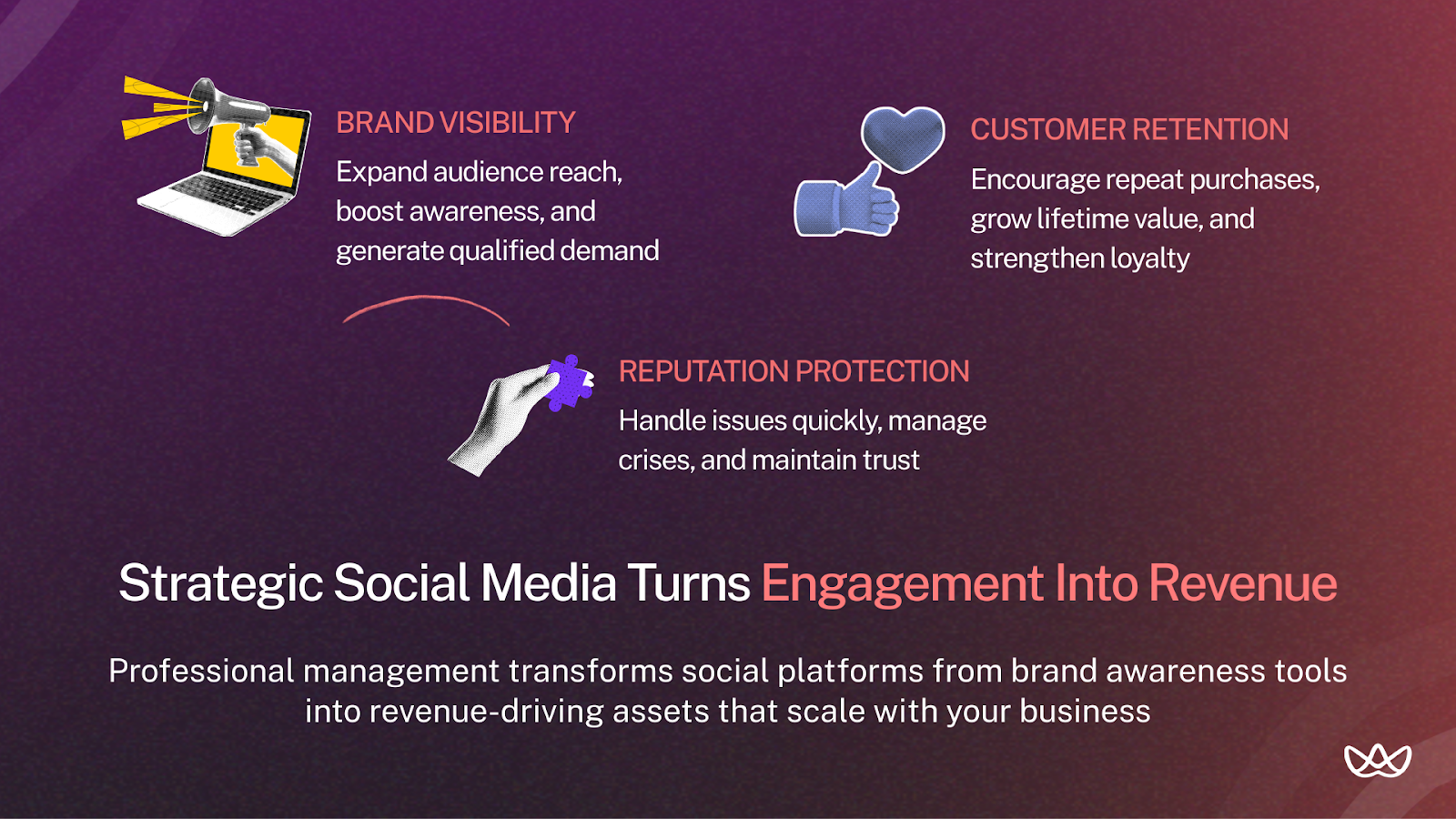
Social media managers are vital for both agencies and startups because they transform casual online presence into a strategic asset that drives measurable business growth, builds brand reputation, and connects directly with target audiences.
1. Driving Brand Visibility and Demand Generation
Social media managers grow brand reach through organic content, paid campaigns, and community engagement. Regular posting helps your audience see the brand when they’re ready to buy.
Demand generation works differently by platform. LinkedIn drives B2B leads with thought leadership and gated content, while Instagram and TikTok build awareness with entertaining or educational posts that warm cold audiences.
Consistency matters most. Viral posts give a quick boost, but steady, valuable content builds a loyal audience that’s more likely to convert than followers gained from ads or one-off viral hits.
2. Improving Client Retention Through Consistent Engagement
Active social media presence keeps brands top-of-mind between purchases. Customers who engage with your social content buy more frequently and stick around longer.
Social media managers nurture these relationships through:
- Responding to customer posts and stories featuring your product.
- Sharing user-generated content to celebrate customers.
- Running exclusive social-only promotions or early access.
- Creating community spaces like Facebook Groups or Discord servers.
Engaged customers are more likely to recommend the brand, leave positive reviews, and defend it when criticism appears.
3. Protecting Brand Reputation & Managing Crises
Managers spot issues early to prevent escalation. A quick response to a frustrated customer can stop a small problem from becoming a bigger one.
Common crisis protocols include:
- Monitoring tools for spikes in negative mentions.
- Pre-approved response templates.
- Clear escalation paths to legal, PR, or executive teams.
- Holding statements while full responses are prepared.
They also correct misinformation and handle sensitive topics to maintain brand trust.
How Social Media Managers Drive Revenue
Social platforms now directly generate revenue through multiple paths:
E-commerce brands see the most direct revenue attribution. A product post on Instagram with tagged items generates immediate sales tracked through Meta's Shops integration.
B2B companies measure differently. LinkedIn content drives whitepaper downloads, webinar signups, and demo requests that enter the sales pipeline. Revenue attribution takes longer but social's role in awareness and consideration stages remains measurable.
Tools Social Media Managers Use Daily
Social media managers use a variety of tools every day for scheduling, content creation, engagement, and analysis. These are some of the essential tools for social media managers - grouped into a few main categories:
1. Scheduling & Publishing Tools
Social media managers use scheduling platforms to plan content in advance and maintain consistent posting without manual work:
- Meta Business Suite: Native scheduling for Facebook and Instagram.
- Buffer: Multi-platform scheduling with team collaboration features.
- Hootsuite: Enterprise-grade scheduling and team workflows.
- Later: Visual planning focused on Instagram and Pinterest.
- Metricool: Scheduling plus competitive analysis and reporting.
These tools reduce the time spent on repetitive posting tasks. Managers batch-create content, schedule it across the week or month, then focus on engagement and strategy.
2. Analytics & Reporting Platforms
Understanding performance requires more than platform-native analytics:
- Google Analytics 4: Website traffic from social referrals.
- Sprout Social: Unified analytics across all platforms with custom reporting.
- Hootsuite Analytics: Team performance tracking and competitive benchmarking.
- Looker Studio: Custom dashboards combining social and business data.
- Native platform analytics: Instagram Insights, LinkedIn Analytics, Twitter Analytics.
Advanced managers combine multiple data sources. They might track Instagram engagement in Sprout Social while measuring website conversions in GA4 to calculate true ROI from social traffic.
3. Collaboration & Project Management Tools
Collaboration tools help social media managers keep teams on the same page:
- Slack: Real-time communication with marketing, design, and clients.
- Notion: Content calendars, campaign briefs, and brand guidelines.
- ClickUp: Task management for campaigns and content workflows.
- Asana: Project tracking for larger campaigns.
- Monday.com: Visual workflow for content approvals.
These tools are especially useful for managing multiple brands or remote teams, keeping everyone aligned and deadlines on track.
4. AI & Automation Tools Used in 2026
AI tools now handle routine tasks so managers can focus on strategy:
- ChatGPT or Claude: Caption drafting, content ideas, response templates.
- Canva Magic Write: Quick social copy variations for testing.
- Copy.ai: Ad copy generation for paid social campaigns.
- Jasper: Brand voice training for consistent content creation.
- Zapier: Workflow automation between tools (e.g., auto-posting blog content to social).
Managers still review and edit AI output rather than posting it directly. AI speeds up first drafts but human judgment ensures the content matches brand voice, avoids errors, and connects with the audience authentically.
Career Path in Social Media Management
A career in social media management typically follows a ladder from entry-level, tactical execution roles to senior-level, strategic leadership positions, often within marketing departments.
Coordinator → Manager → Strategist → Lead
Social media careers follow a clear progression:
- Social Media Coordinator (0-2 years): Executes content calendars, schedules posts, monitors comments, assists with reporting. Works under direct supervision from a manager or strategist.
- Social Media Manager (2-5 years): Owns full account management, develops content strategy, runs paid campaigns, reports performance independently. The core individual contributor role.
- Social Media Strategist (5-8 years): Focuses on cross-platform strategy, campaign planning, audience research, and optimization. Less hands-on posting, more strategic planning and analysis.
- Social Media Lead/Director (8+ years): Manages teams of managers and coordinators, sets overarching social strategy, owns budget allocation across platforms, reports to CMO or VP Marketing.
Not everyone follows this exact path. Some specialize in areas like paid social or community management instead of moving into leadership. Others shift into broader digital marketing or content strategy roles.
Common Specializations
As the field matures, specialization is becoming more common:
- Content Specialists: Video, graphics, or copywriting.
- Community Managers: Engagement and moderation.
- Paid Social Experts: Campaign optimization and media buying.
- Social Strategists: Planning, audience research, competitive analysis.
- Analytics Specialists: Data analysis and reporting.
Specialists usually earn more than generalists with similar experience. For example, a paid social expert managing $500K in monthly ads earns more than a general social media manager with the same years of experience.
Salary Expectations: U.S. vs LATAM Remote Talent
Compensation varies a lot by location and role:
LATAM professionals deliver similar quality at lower costs due to local market rates and purchasing power. You can also access experienced managers with strong portfolios, English fluency, and U.S. timezone alignment through platforms like Floowi.
Typical Years of Experience by Level
Experience requirements vary by company size and expectations:
- Entry/Coordinator: 0-2 years, often recent grads or career changers.
- Mid-level Manager: 3-5 years managing accounts.
- Senior Manager/Strategist: 5-8 years with leadership or specialized expertise.
- Director/Lead: 8+ years overseeing teams and strategy.
LATAM candidates often bring more experience than their salaries suggest. For example, a Colombian manager with 6 years’ experience might earn what a U.S. manager with 3 years does, offering strong value for companies hiring internationally.
How to Become a Social Media Manager
Becoming a social media manager involves learning the right skills and getting hands-on experience. Formal qualifications can help, but a strong portfolio and real-world results are often the most crucial factors.
Relevant Degrees, Courses & Certifications
Traditional marketing, communications, or journalism degrees provide good foundations. Public relations and advertising programs also teach relevant skills. But formal education isn't required as much in social media compared to other marketing roles.
Certifications that add credibility:
- Meta Blueprint Certification (Facebook/Instagram advertising).
- Google Analytics Individual Qualification.
- HubSpot Social Media Marketing Certification.
- Hootsuite Social Marketing Certification.
- YouTube Creator Academy courses.
These certifications prove platform knowledge but don't replace hands-on experience. Employers value portfolios showing real results over certificates.
Gaining Experience Through Freelance, Internships or Small Brands
Start by managing social for local businesses, nonprofits, or personal projects. Small brands let you test strategies and build a portfolio without high-stakes risks.
Freelance platforms like Upwork or Fiverr give client experience. Start with tasks like scheduling posts or community management, then expand to strategy as your skills grow.
Internships at agencies or startups offer structured learning. Agencies expose you to multiple industries quickly, while startups give broader responsibility earlier.
Building a Standout Portfolio & Personal Brand
Show measurable results, not just pretty posts:
- Document 3-5 case studies with metrics, screenshots, and strategy notes.
- Maintain an active personal social presence to demonstrate platform knowledge.
- Create content showing expertise: LinkedIn posts, TikToks, or newsletters about trends and campaigns.
Skills to Learn First (Beginner Roadmap)
Focus on essentials before spreading too thin:
- Master 2-3 platforms deeply (Instagram and LinkedIn work well).
- Learn basic graphic design in Canva.
- Track your own account metrics to understand analytics.
- Practice platform-specific copy: hooks, CTAs, engaging questions.
- Study successful accounts in your industry.
- Learn one scheduling tool well.
- Handle comments and messages professionally to build customer service skills.
Technical skills matter less than understanding what resonates with your audience. Analytics and copywriting form the foundation for everything else.
Challenges Social Media Managers Face (and How Pros Solve Them)
Social media managers primarily struggle with declining organic reach due to algorithm changes and the difficulty in proving the ROI of their efforts to stakeholders.
1. Algorithm Changes & Rapid Platform Evolution
Platforms change algorithms constantly to improve user experience and ad revenue. What worked last month might fail this month.
Solutions experienced managers use:
- Diversify across multiple platforms.
- Focus on engagement, not just follower count.
- Test new formats early.
- Build owned channels like email lists.
- Stay updated via blogs and industry newsletters.
The managers who adapt fastest gain advantages. Instagram prioritized Reels heavily in 2021-2022, rewarding early adopters with massive reach before competition increased.
2. Managing Multiple Brands or High-Volume Workloads
Agency managers juggling 5-8 client accounts face constant context switching and deadline pressure.
Strategies for handling volume:
- Batch similar tasks (e.g., write captions Monday, schedule Tuesday).
- Use templates for recurring content.
- Schedule posts ahead of time.
- Set clear client boundaries.
- Delegate or outsource tasks when possible.
Efficiency beats longer hours - strong systems help manage more accounts with better quality.
3. Avoiding Burnout & Staying Creative
Social media management creates burnout through always-on expectations, creative pressure, and negative audience interactions.
Burnout prevention tactics:
- Schedule content in advance to protect evenings and weekends.
- Take breaks from social media.
- Draw inspiration from outside your industry.
- Set work-hour boundaries.
Agencies that respect balance retain talent better, and LATAM professionals often value this highly.
4. Client Communication Overload
Clients often want constant updates, quick turnarounds, and major changes without schedule adjustments.
Managing client relationships effectively:
- Weekly check-ins instead of constant messages.
- Clear approval workflows.
- Monthly progress reports.
- Document requests in project management tools.
- Push back on scope creep referencing agreements.
5. Balancing Strategy vs. Execution
Managers often get stuck executing tactics without time for strategic thinking.
Ways to balance:
- Block calendar time for strategy.
- Automate or delegate repetitive tasks.
- Document strategic decisions for clarity.
- Review performance monthly.
- Communicate strategy to stakeholders.
Senior managers shift more toward strategy while junior team members handle execution. Individual contributors at smaller companies need discipline to protect strategic thinking time.
Getting Started
Social media management blends creative content, audience engagement, and performance analysis into a role that evolves daily.
Strong workflows, clear priorities, and adaptability help managers handle multiple campaigns, trends, and client or internal requests without losing focus.
You can start building your team with experienced LATAM professionals - bilingual, aligned to U.S. timezones, and cost-effective - through Floowi. Book a free consultation to get started.
Also check The Key Components of the 7 Marketing Core Functions
Frequently Asked Questions
What does a social media manager do on a daily basis?
Social media managers plan and publish content, respond to comments and messages, monitor performance metrics, coordinate with design and marketing teams, and adjust strategies based on what's working. Daily work includes creating posts, engaging with audiences, running ad campaigns, and tracking results against business goals.
How do responsibilities differ between agency and in-house social media managers?
Agency managers handle multiple client accounts simultaneously with broader but shallower work across different industries. In-house managers focus deeply on one brand, developing long-term strategy and coordinating across internal departments. Agency work offers more variety while in-house roles provide deeper strategic involvement.
What analytics skills translate into measurable business impact?
Social media managers track engagement rates, reach, click-through rates, and conversion metrics. They identify which content types drive results, calculate ROI from paid campaigns, and attribute revenue to social efforts. Strong managers connect social metrics to business outcomes like leads generated, sales closed, or customer retention improved.
How do managers use KPIs to refine strategy?
Managers review performance data weekly or monthly to spot patterns. If carousel posts consistently outperform single images, they create more carousels. If morning posts get better engagement than afternoon, they adjust scheduling. KPIs guide decisions about content formats, posting times, platform priorities, and budget allocation.
How do managers improve client retention through engagement?
Active community management keeps customers connected to brands between purchases. Managers respond quickly to questions, share user-generated content, run social-exclusive promotions, and create spaces for customers to connect with each other. This ongoing engagement increases customer lifetime value and reduces churn.
What scheduling tools are most popular in 2026?
Meta Business Suite dominates for Facebook and Instagram due to native integration. Buffer and Hootsuite serve teams managing multiple platforms. Later specializes in visual planning for Instagram-heavy brands. Metricool combines scheduling with competitive analysis. Tool choice depends on platforms used, team size, and reporting needs.
How do coordinators transition into social media managers?
Coordinators gain independence by owning smaller accounts, running campaigns with supervision, and demonstrating strategic thinking beyond execution. They build portfolios showing measurable results, develop expertise in specific platforms or skills, and take initiative on improvements rather than just following instructions. The transition typically takes 1-2 years.
What red flags should agencies watch for in candidates?
Warning signs include inability to show measurable results from past work, poor understanding of different platform purposes, weak writing samples, lack of familiarity with standard tools, or unrealistic promises about follower growth. Strong candidates discuss strategy, show diverse portfolio work, and understand that social media supports broader business goals rather than existing in isolation.


