





Freelance web designers give agencies and startups the flexibility to scale design work without long-term commitments. They’re most effective on defined projects like landing pages, site redesigns, or campaign-specific tasks where a full-time hire isn’t justified.
LATAM freelancers can deliver U.S.-level quality at 40-50% lower rates, with overlapping time zones that make real collaboration possible. It’s also easier to get started if you hire vetted LATAM freelance web designers through pre-screened talent partners like Floowi.
Let’s look at how to hire freelance web designers, evaluate their skills, set rates, and avoid the common hiring mistakes that slow projects down.
Why Hire a Freelance Web Designer?
Hiring a freelance web designer in 2026 is flexible and cheaper than agencies, often 40-60% less. You work directly with the designer, speed up delivery, and get projects that match your vision. Freelancers also bring specialized skills in areas like e-commerce or unique UI/UX, making them ideal for startups and small businesses.
Benefits for Agencies, Founders & Fast-Growing Teams
Freelancers solve specific capacity problems without adding permanent overhead:
- Landing page backlog holding up marketing campaigns.
- Seasonal volume spikes requiring temporary design capacity.
- One-off redesign projects that don't justify a full-time hire.
- Specialized skills your current team lacks.
- Testing design approaches before committing to larger engagements.
Agencies especially benefit when client projects arrive unpredictably. You bill clients for design work without carrying salary costs during slow periods.
Why Freelancers Offer Speed, Flexibility & Lower Costs
Freelancers eliminate the hiring overhead of full-time roles. No benefits packages, no PTO management, no annual reviews. You pay for output, not presence.
Speed advantages: good freelancers can start within days rather than the weeks required for traditional hiring. Project-based pricing also caps costs upfront, avoiding the scope creep that hourly arrangements sometimes create.
Flexibility matters when workload varies. Scale up during busy periods, scale down when projects complete. That elasticity is impossible with salaried employees.
Freelance vs Agency vs In-House: Best Option for 2026
Each option fits different situations. Freelancers are best for defined projects with clear deliverables. Agencies combine strategy, design, and development for more complex initiatives. In-house designers give you dedicated capacity for ongoing, predictable work.
The right choice depends on your project scope, budget, and how consistent your design needs are.
Freelance vs Agency vs Full-Time Web Designers: Which Is Best?
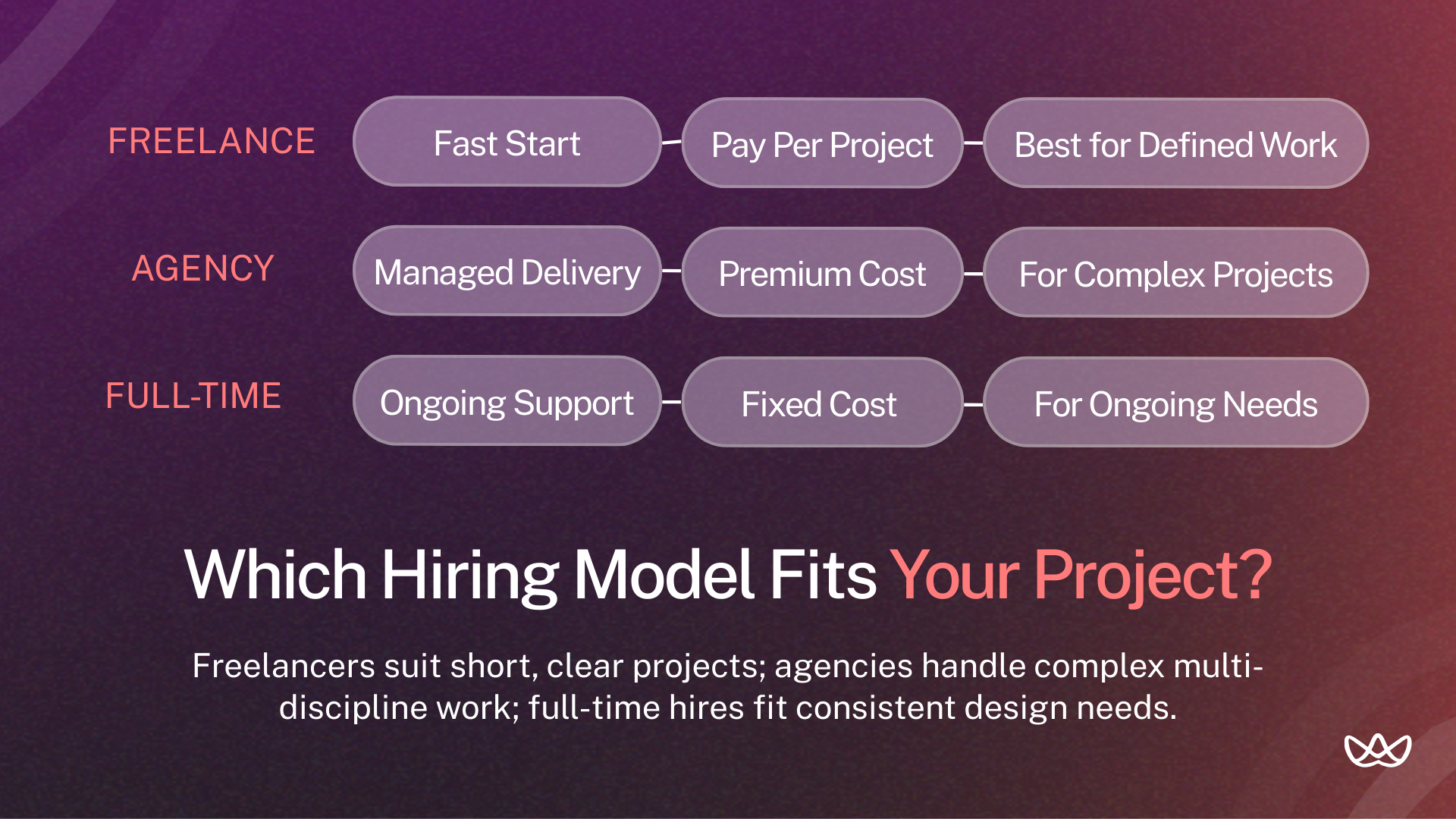
Freelancers are cost-effective and flexible, usually 30-60% cheaper than agencies, making them ideal for small or specialized projects. Agencies bring full teams for complex builds needing strategy and reliability. In-house designers offer long-term consistency and brand focus, but come with higher salaries and benefits.
Cost Comparison
Freelancers cost less than agencies because you're not paying for account managers, office space, and multiple layers of overhead. They cost less than full-time hires because you only pay for active project work.
Quality, Speed & Collaboration Differences
Freelancers:
- Fast project starts (days, not weeks)
- Direct communication with the designer
- Variable quality requiring careful vetting
- Limited capacity for large or ongoing projects
Agencies:
- Multiple specialists available
- Established processes and project management
- Premium pricing with overhead built in
- Account managers between you and actual designers
Full-Time:
- Maximum availability and dedication
- Deep brand knowledge over time
- Highest fixed cost regardless of workload
- Best for consistent, high-volume needs
When a Freelancer Is the Smarter Option
Freelancers are a good fit when:
- Project scope is clear and time-bound.
- Budget can’t cover agency rates or a full-time salary.
- You need specialized skills for a single project.
- Work volume fluctuates and predictability is low.
- You want to test before committing to longer-term hiring.
What to Look for in a High-Performing Freelance Web Designer
A strong freelance web designer has both technical skills and business awareness. They should be comfortable with tools like Figma or Adobe, understand UI/UX for effective user flows, handle responsive design, and know basic SEO.
Clear communication, organized project management, and aligning designs with your goals are important. Familiarity with platforms like Webflow, WordPress, or Shopify is helpful.
Clear Scope, Conversion Goals & Deliverables
Before evaluating candidates, define what you actually need:
- Number of pages or screens.
- Platform requirements (Webflow, WordPress, Shopify).
- Design only or design + implementation.
- Conversion goals (signups, purchases, inquiries).
- Timeline and milestones.
- Revision limits
Vague briefs attract vague proposals. Specific requirements surface whether a freelancer actually understands the work.
How to Assess Portfolios for UX, UI & Business Impact
Strong portfolios show:
- Case studies with business context and outcomes.
- Before/after examples demonstrating improvement.
- Shipped work that actually went live.
- Mobile and responsive versions.
- Explanation of constraints and decisions.
Red flags:
- Only concept work, no shipped projects.
- Identical styling across every project.
- No mobile examples.
- Can't explain reasoning behind decisions.
- No metrics or business outcomes mentioned.
Required Skills for Modern Web Design (2026 Standards)
Before you hire, make sure your designer has the right mix of skills for 2026. They should handle modern tools, design for all devices, think about UX, and communicate effectively in a remote setup.
Communication, Responsiveness & Remote-Work Reliability
Freelancers work remotely. Communication quality determines project success.
Evaluate:
- Response time during initial conversations
- Clarity of written communication
- Proactive updates vs. waiting to be asked
- Availability during your working hours
- Tool familiarity (Slack, Figma, Loom)
References, Trial Tasks & Post-Launch Support
Always request references from past clients. Ask specifically about deadline reliability, communication quality, and how they handled unexpected challenges.
Trial task examples:
- Redesign one section of an existing page (2-3 days).
- Create a component library for a specific use case (3-5 days).
- Solve a real UX problem your site has (2-4 days).
Pay for trials, since unpaid work usually attracts designers who aren’t in demand elsewhere.
Freelance Web Designer Hiring Checklist
Use this checklist to make sure your freelance web designer meets all key skills, communication, and process requirements before hiring.
The 4 Pillars of Freelance Web Design Excellence

1. UX Thinking: Designs for user goals and business outcomes, not just visual appeal. Can explain why elements are placed where they are.
2. Technical Execution: Creates designs that translate cleanly to code. Understands platform constraints and delivers developer-ready specs.
3. Communication: Documents decisions, shares progress proactively, and responds reliably. Critical for remote collaboration.
4. Consistency: Delivers quality work on deadline repeatedly. One good project means nothing if the next one falls apart.
Evaluate freelancers against all four pillars, not just portfolio visuals.
Where to Find Freelance Web Designers
The fastest way to find quality freelance web designers is to focus on vetted platforms and trusted sources. This ensures you’re reviewing qualified candidates who meet technical skills, communication, and remote work standards, saving time and reducing hiring risk.
Floowi - Best LATAM Freelance Web Designers (Pre-Vetted)
Vetted partners screen candidates for technical skills, English proficiency, and remote work readiness, so you only see qualified designers instead of sorting through hundreds of applications.
With Floowi, you can hire vetted LATAM freelance web designers in under 15 days and access bilingual, pre-screened designers ready to start.
Best Places to Source Designers (US vs LATAM)
Once you know what to look for, you can focus on the platforms that actually connect you with qualified talent, whether in the U.S. or LATAM.
U.S. Sources:
- Upwork (large pool, variable quality).
- Dribbble (portfolio-focused, cold outreach).
- LinkedIn (professional context, high volume).
- Toptal (claims top 3%, premium rates).
LATAM Sources:
- Floowi (pre-vetted, time-zone aligned).
- Regional job boards.
- Design communities in Argentina, Colombia, Mexico, Brazil.
Why LATAM Freelancers Are Becoming the Top Choice
LATAM designers offer the cost efficiency of offshore with the collaboration benefits of local:
- Time zones align with U.S. business hours (1-3 hour difference).
- English proficiency has improved significantly.
- Same tools and training as U.S. designers.
- Cost savings of 40-50% without quality sacrifice.
For agencies billing design work to clients, LATAM freelancers maximize margin without compromising deliverables.
How Vetted Talent Partners Reduce Hiring Risk
Direct hiring means screening dozens of applicants yourself. Vetted partners handle:
- Initial skill assessment
- English proficiency verification
- Portfolio and reference checks
- Remote work readiness evaluation
The time savings often justify partner fees, and quality filtering reduces bad hire risk significantly.
LATAM Freelance Web Designers: Why They Stand Out
In 2026, LATAM freelance web designers are a top choice for North American businesses. Their time zones overlap with the U.S., enabling real-time collaboration, and their rates are 30-60% lower than local talent, delivering professional work without stretching budgets.
U.S.-Aligned Communication & Time Zones
LATAM countries span UTC-3 to UTC-6. A designer in Argentina shares 6+ hours with New York. A designer in Mexico aligns almost perfectly with California.
This overlap enables:
- Real-time feedback during working hours
- Same-day revision cycles
- Live Figma collaboration
- Meetings at reasonable times
Compare that to 12-hour gaps with offshore Asian markets where feedback loops stretch to 24+ hours.
Expertise With Figma, Webflow & No-Code Tools
LATAM designers learn identical tools to U.S. designers. Many have deeper Webflow expertise because implementation skills command premium rates in their markets.
Common proficiencies:
- Figma (components, auto-layout, prototyping)
- Webflow (CMS, interactions, responsive)
- Framer (advanced animations)
- WordPress/Elementor
- Shopify themes
Typical Delivery Benchmarks (Landing Pages, Sites, Redesigns)
Vetted LATAM freelancers typically complete projects faster than U.S. freelancers and agencies, from wireframes in 1–2 days to full sites or redesigns in 2–4 weeks, thanks to fewer overheads and more focused delivery.
Dedicated freelancers often outpace agencies because there's no project management overhead or competing client priorities.
How Much Does It Cost to Hire a Freelance Web Designer?
Costs vary by experience and location. U.S. freelancers charge significantly more than LATAM designers, while LATAM talent offers competitive rates without compromising quality.
Hourly, Monthly & Project-Based Pricing
Hourly: Best for ongoing support or unclear scope. Risk of cost creep. LATAM range: $25-$85/hour.
Project-based: Fixed price for defined deliverables. Risk shifts to freelancer. Best for clear scope.
Monthly retainer: Guaranteed availability for set hours. Works for ongoing relationships. LATAM range: $1,500-$5,000/month.
Cost Drivers: Experience, Complexity & Tech Stack
Factors that increase rates:
- Senior experience (5+ years)
- Specialized industry knowledge
- Design + implementation (not just design)
- Complex interactions or animations
- Rush timelines
- Enterprise-level projects
Typical Project Ranges: Landing Pages, Multi-Page Sites & Redesigns
Project costs vary based on size and complexity. LATAM freelancers generally offer 40-60% lower rates than U.S. designers while covering the same scope.
How Rates Compare When You Hire Freelance Web Designer Talent Globally
LATAM freelance web designers usually charge 40-60% less than U.S. designers for similar quality. This isn’t about skill - many have years of experience working directly with U.S. clients. The lower rates mainly reflect differences in cost of living.
How to Hire a Freelance Web Designer Step-by-Step
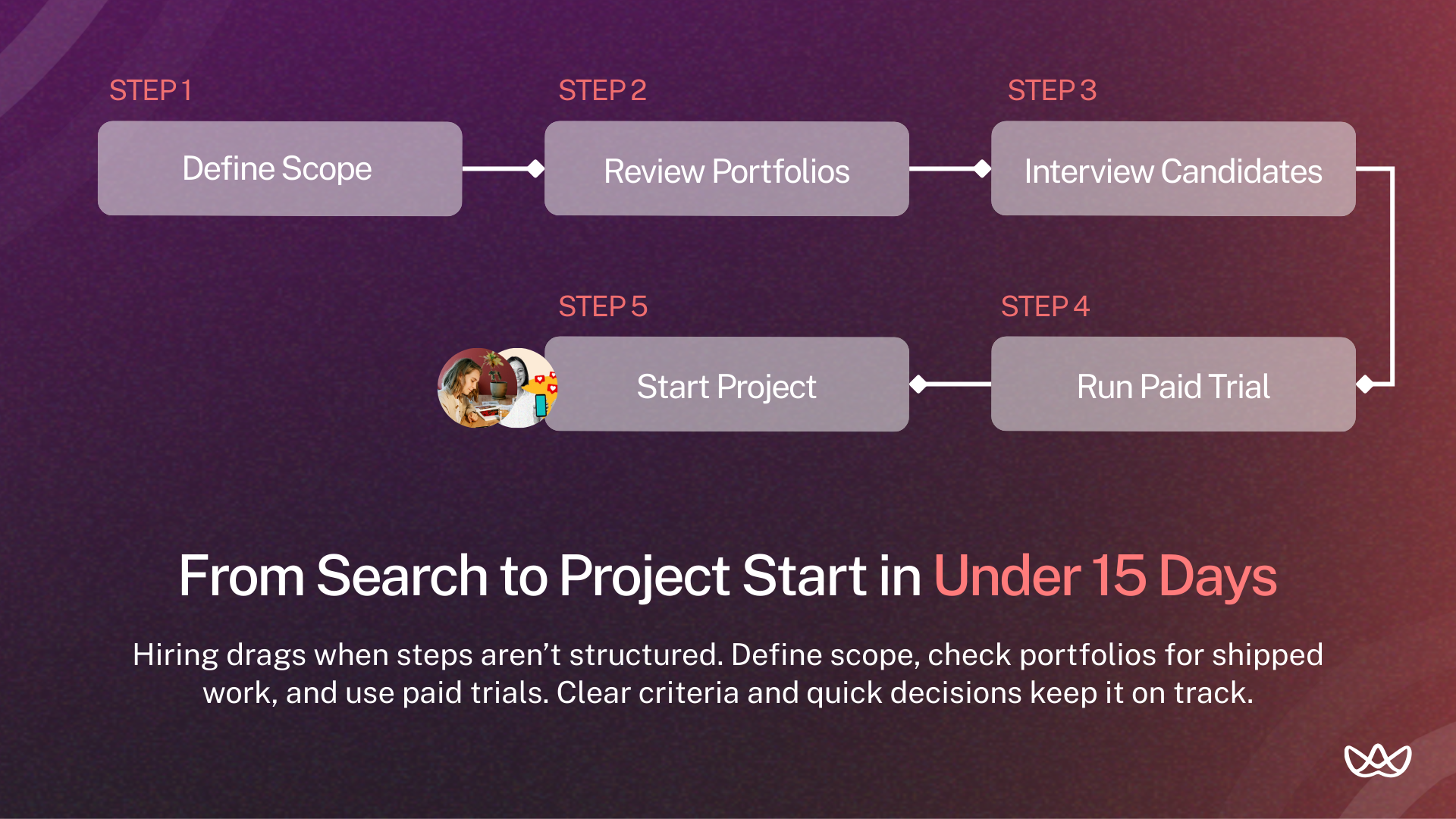
1. Define Scope, Deliverables & Required Skills
Before posting anywhere, document:
- Specific pages or screens needed
- Platform and tools required
- Design only vs. design + build
- Timeline and key milestones
- Budget range
- Must-have skills vs. nice-to-have
Clear scope attracts qualified candidates and filters out mismatches early.
2. Shortlist, Screen & Interview Candidates
Step 1: Review portfolios for shipped work and UX reasoning (15-20 min each).
Step 2: Short video call for communication assessment (20-30 min).
Step 3: Technical questions to verify depth.
Step 4: Reference checks with past clients.
Narrow to 2-3 candidates for trial tasks.
3. Run Paid Trial Tasks for Quality Validation
Trials show what portfolios can’t: how organized files are, how the designer communicates, how they respond to feedback, and their real working pace.
Keep tasks small but realistic, pay fairly, and focus on both the process and the final output.
4. Set KPIs, Timelines & Communication Cadence
Before work begins, align on:
- Deliverables and acceptance criteria
- Communication schedule (daily async, weekly sync)
- Tools and channels
- Feedback process and revision limits
- Escalation paths for blockers
5. Contracts, Payments & Clear Deliverables
Written agreements should cover:
- Scope and deliverables
- Payment terms (milestone-based recommended)
- Revision limits
- Ownership of design files
- Confidentiality if needed
- Termination terms
Never start work without written agreement on scope and payment.
Common Mistakes to Avoid
Common mistakes in 2026 include picking a designer based only on price, not setting clear project goals, and overlooking technical skills like mobile responsiveness and SEO. Skipping a detailed contract or giving up control of domain and hosting can also cause issues with ownership, maintenance, and site security.
Choosing the Lowest Bid Without Skill Verification
- Cheapest bids often come from inexperienced designers.
- Low rates sometimes indicate overseas sweatshop operations.
- Quality problems cost more to fix than paying fair rates initially.
- Always verify skills through portfolio review and trials.
Skipping Scope, Revisions & Maintenance Planning
- Undefined scope leads to endless revision requests.
- No revision limits creates conflict when changes pile up.
- Forgetting post-launch maintenance leaves you stranded.
- Document everything before starting work.
Not Testing UX Thinking or Conversion Skills
- Pretty portfolios don't guarantee effective designs.
- Ask candidates to explain reasoning, not just show visuals.
- Test with real problems from your business
- Conversion-focused thinking separates good from great
Poor Onboarding & Communication Alignment
- Assuming freelancers know your brand without briefing
- No clear communication channels or expectations
- Infrequent check-ins that let problems compound
- Missing tool access that delays project starts
Your Next Move
LATAM freelancers combine U.S.-level skills with lower rates and overlapping time zones, making them ideal for agencies and startups needing design capacity without full-time hires. Vetted partners save time and reduce hiring risk by letting you focus on pre-qualified candidates.
Key Takeaways:
- Freelancers provide faster, flexible support for defined projects.
- Focus on portfolios showing shipped work and UX reasoning.
- LATAM freelancers offer U.S.-quality at 40-50% lower rates.
- Paid trials help validate skills and working style.
- The 4 pillars: UX thinking, technical execution, communication, consistency.
- Vetted partners cut hiring time significantly.
- Set clear scope, revisions, and payment terms before starting.
Hire vetted LATAM freelance web designers in under 15 days with Floowi. Access bilingual, pre-vetted designers and book your free consultation today.
Frequently Asked Questions
How do freelance web designers reduce costs compared to agencies?
Freelancers cut out agency overhead like account managers, office space, and multiple approval layers. You pay directly for the design work, which typically saves 40–60% compared to agencies.
How do freelancers demonstrate conversion-focused design?
Look for portfolios that highlight business outcomes, not just visuals. Strong freelancers explain why CTAs are placed where they are, how user flows are structured, and what metrics their designs influenced. Ask how they approach conversion optimization directly.
What portfolio signals show UX thinking beyond aesthetics?
Check for case studies that explain decisions: why elements are placed a certain way, what user problems were solved, and how constraints shaped the design. Portfolios that only describe colors or typography usually lack strategic depth.
Why are LATAM freelancers becoming the top choice in 2026?
They align closely with U.S. time zones (1-3 hours), often have strong English skills, use the same tools, and cost 40-50% less. This gives you nearshore collaboration benefits without the higher U.S. rates.
How do U.S. freelance rates compare to LATAM rates?
Senior U.S. freelancers charge $120–$175/hour, while equivalent LATAM designers charge $55–$85/hour. Project rates show similar differences, but quality is comparable thanks to global access to training and tools.
What KPIs should agencies set for freelancers?
Track delivery against timelines, number of revisions, stakeholder satisfaction, and conversion results. For ongoing work, also monitor communication responsiveness and file organization.
How do paid trial tasks validate skills?
Trials show working style, not just final results. You can see file organization, communication patterns, feedback responsiveness, and problem-solving approaches. Portfolios show output; trials show process.
How do agencies verify skills before hiring?
Review portfolios of shipped work, ask technical interview questions, check references, and run paid trial tasks. Skipping any step means you’re guessing rather than evaluating.


