


.png)



A social media manager plans content, publishes it on schedule, and tracks how people respond across different platforms. The role matters more today because posting volume has increased and most brands now rely on short-form video, fast replies, and steady community activity.
Hiring demand has followed that shift. Companies want someone who can manage planning, execution, and analytics without slowing the workflow. Many teams in the U.S. choose to hire vetted social media managers in LATAM to stay aligned with their time zone while keeping costs predictable.
Let’s break down the specific skills, hiring process, and salary ranges required to bring a social media manager onto your team.
Why Hiring a Social Media Manager Is Crucial for Growth in 2026
Social media is no longer just an optional add-on but a key part of increasing visibility, engagement, and sales. This is why many companies choose to hire a social media manager early in their growth stage.
A dedicated manager brings the expertise, consistency, and data-driven approach needed to stay effective as digital channels keep changing.
1. Consistent Branding and Audience Growth
Social media managers maintain unified messaging across platforms. They establish posting schedules, visual guidelines, and tone standards that build recognition over time.
Consistency builds trust. When your audience sees regular, high-quality content, they engage more frequently. A social media manager ensures your brand voice remains stable even as campaigns shift or team members change.
2. Improved Engagement and ROI on Social Channels
Social media managers monitor engagement closely. They respond to comments, track messages, and adjust content based on what’s working.
It’s not just about follower counts. Metrics like engagement rate, click-throughs, and conversions tell you if your content is actually producing results. Managers use these numbers to improve campaigns, rather than guessing what will work.
3. Strategic Management Across Multiple Platforms
Each platform requires different content formats and posting rhythms. A social media manager allocates resources based on where your audience spends time and what drives results.
How Social Media Managers Drive ROI in Modern Marketing
A social media manager links social activity directly to business results. They set up campaigns that generate leads, support sales, and reduce marketing costs.
For lead generation, they identify the right audience and deliver content or offers that attract qualified prospects. When social channels support direct sales, managers design posts, promotions, and campaigns that encourage conversions while tracking performance.
They also handle paid advertising, testing ad copy, visuals, and targeting to improve return on ad spend. All actions are measured so each campaign contributes to tangible results like leads, revenue, or customer lifetime value.
When Is the Right Time to Hire a Social Media Manager?
Hiring becomes necessary when social media tasks consume time that should go to core business activities. Here are specific triggers:
- You spend 10+ hours per week on posting and engagement.
- Content goes out irregularly or lacks consistent tone.
- You miss engagement opportunities because you can't monitor channels.
- Analytics remain unchecked for weeks at a time.
- Campaigns launch without documented strategy or goals.
Common Triggers for Hiring: Revenue Growth, Launches, and Brand Expansion
Different business stages create natural points for bringing a social media manager on board.
For startups and agencies scaling fast, hiring LATAM-based social media managers ensures expertise and time zone alignment without the overhead of U.S. salaries.
When the Goal is Revenue Growth
If social media is not contributing to sales, a manager helps link online activity to revenue. They run targeted campaigns to capture qualified leads, use platform-specific audience targeting, and create content that supports direct sales through features like Instagram or Facebook shoppable posts.
They also optimize paid campaigns, testing copy, visuals, and targeting to improve return on ad spend.
When the Goal is a Product or Service Launch
During a launch, a manager plans and executes the full social strategy. They build anticipation with teasers and countdowns, coordinate content on launch day, work with influencers, and monitor feedback in real time.
Post-launch, they use sentiment analysis and user-generated content to sustain momentum.
When the Goal is Brand Expansion
For brands looking to grow their reach, a manager ensures consistent messaging across all platforms. They develop content strategies tailored to each channel, actively engage followers, and manage the brand’s reputation.
By creating a cohesive presence and cultivating a community, they help build loyalty and strengthen the brand’s impact.
Essential Skills to Look for When You Hire a Social Media Manager
When hiring a social media manager, look for strategic, creative, and analytical skills, along with evidence of measurable results like lead generation and ROI, not just engagement.
1. Core Technical Skills
Technical competence is the baseline that separates strong candidates from weak ones. A social media manager needs the following skills:
Beyond these, candidates should understand which KPIs truly matter, such as conversion rates, and be able to use analytics to make decisions that improve ROI.
They should also have basic budget management skills for paid campaigns and a working knowledge of how social media interacts with SEO to drive website traffic.
2. Creative and Strategic Strengths
A social media manager should be able to write clear, concise copy that works on different platforms and supports your marketing goals. They should plan campaigns with a purpose, showing how each post or series contributes to measurable outcomes.
Experience with short-form video and basic editing helps, but what matters more is that they understand what content works for your audience and can adjust based on performance and platform changes.
They should know how to prioritize channels and decide where to focus resources rather than trying to do everything at once.
3. Soft Skills That Drive Success
Communication and collaboration are essential. A manager needs to coordinate with sales, product, and support teams while keeping social media plans on track.
They also need to adapt as platforms and audience behavior change. Algorithms, features, and trends shift regularly, and a capable manager adjusts strategy without overreacting to every change.
Organization and problem-solving are important too. They must manage multiple campaigns, respond to issues or negative feedback calmly, and keep the community engaged in a consistent way.
How to Evaluate Social Media Managers' Portfolios and Case Studies
When reviewing candidates, look for evidence of consistent posting, quantifiable results, and industry alignment:
Ask candidates to walk through specific campaigns. Listen for how they set goals, allocated resources, measured success, and adjusted strategies based on performance.
A good candidate will explain not just what they posted, but why they made each decision and how it tied to measurable business outcomes.
Social Media Manager Salary & Hiring Costs in 2026
Salaries vary significantly by region and experience level.
Hiring from LATAM can reduce costs without losing expertise. Many professionals are bilingual and understand U.S. trends, which makes collaboration easier.
For smaller campaigns, a junior or mid-level manager can handle posting, engagement, and basic analytics. For bigger campaigns or paid ad work, a senior manager brings the experience to handle strategy and measurement.
Some teams combine a LATAM manager for day-to-day work with a senior manager locally to keep things running smoothly and make sure results are tracked effectively.
How LATAM Social Media Managers Deliver ROI at Lower Costs
Social media managers in LATAM often speak English and understand U.S. trends, which makes working across borders much easier. Hiring from the region can cut costs by up to 60% while still maintaining quality.
Time zone alignment also helps. LATAM managers can work during U.S. business hours, responding to comments and adjusting campaigns in real time.
You can also hire experienced social media managers in LATAM through Floowi, with vetted candidates who are compliant and ready to collaborate with U.S. teams.
Top Platforms to Hire a Social Media Manager in 2026
When hiring a social media manager, the platform you choose affects not just cost but how much oversight and support you’ll need - some options give ready-to-go, vetted talent, while others require more hands-on management.
For short-term or one-off projects, platforms like Fiverr or Upwork can work, though you may need to check quality and manage the process more closely.
For ongoing campaigns or consistent multi-platform management, a platform with vetted full-time managers, like Floowi, makes collaboration smoother and helps keep results on track.
Floowi: Best for Vetted LATAM Social Media Managers in Aligned Time Zones
Floowi connects U.S. companies with social media managers from Latin America who are already vetted for skills and experience. These managers have experience in campaign planning, content strategy, and analytics.
Onboarding is usually quick, often within 10–15 days. The vetting process checks technical abilities, cultural fit, and proven results in similar industries, so teams can start collaborating confidently.
How to Hire a Social Media Manager: A 6-Step Process
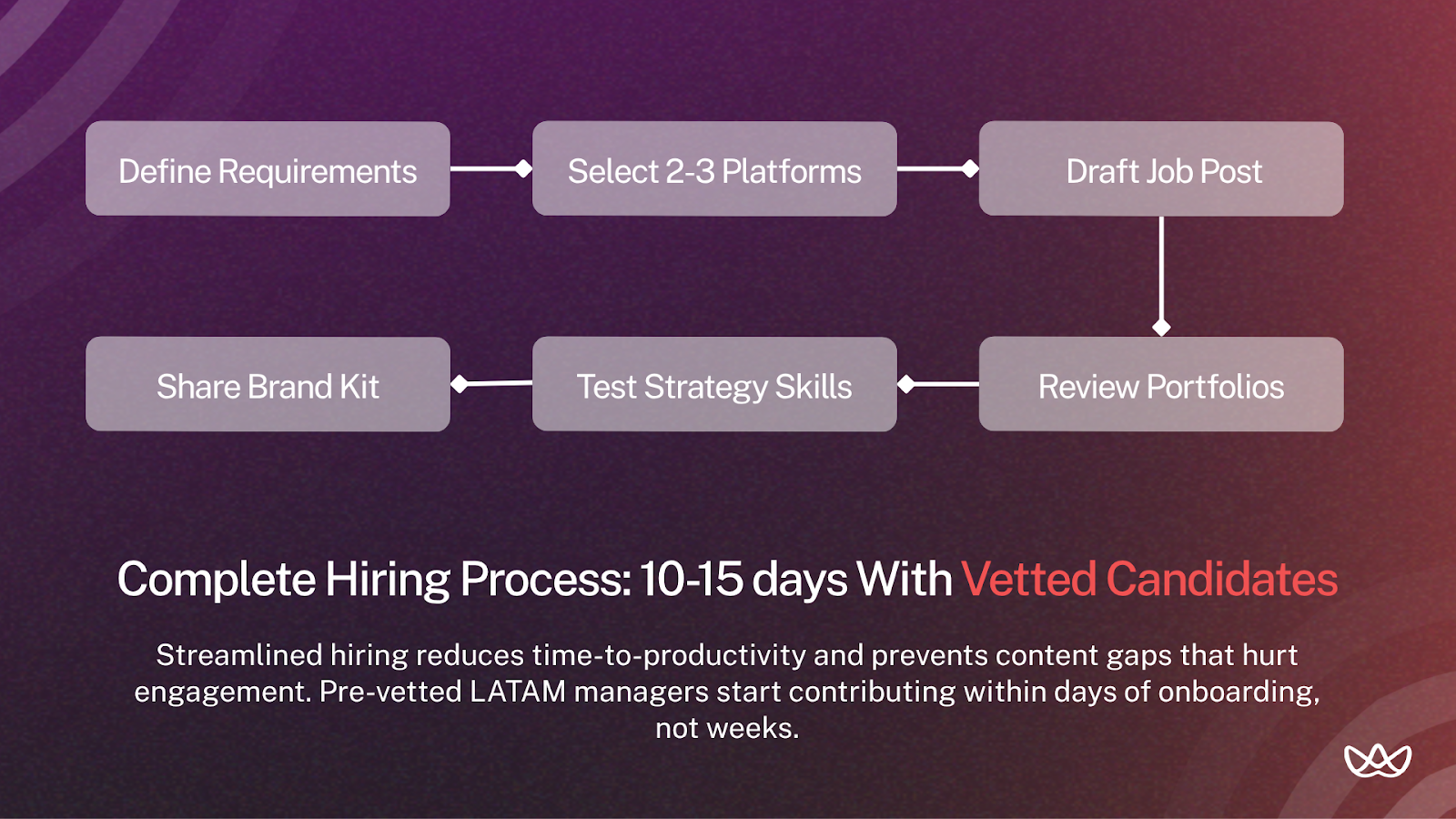
Follow these six steps to hire a social media manager who can handle both strategy and daily execution.
- Define business goals and KPIs. Clarify what you want social media to achieve: brand awareness, lead generation, customer retention, or direct sales.
- Choose platforms and target audience. Focus resources on 2–3 platforms where your customers actually spend time.
- Write a precise job description. List required technical skills, preferred experience, and expected deliverables. Include salary range and work arrangement details.
- Shortlist candidates based on skills and case studies. Review portfolios for relevant experience and measurable results.
- Interview for creativity and analytics mindset. Test how candidates think through strategy and respond to performance data.
- Onboard with tools, templates, and expectations. Provide brand guidelines, content calendars, and clear KPIs from day one.
Sample Interview Questions to Test Strategy and Creativity
You can ask a mix of behavioral and situational questions to see how a candidate plans, problem-solves, and delivers results.
Strategic Thinking:
- Can you describe your process for developing a social media strategy from scratch for a new business in our industry?
- Tell me about a time you used social media metrics to guide a major decision. What did you learn, and what was the outcome?
- How do you measure the ROI of a campaign beyond likes and followers? Which KPIs matter most to you?
- Describe a situation where a campaign underperformed. How did you analyze it, and what adjustments did you make?
- How would you conduct a competitive analysis for our business on social media? What would you look for, and how would those insights inform your strategy?
- Which social platforms are most important for our brand, and how would you approach each differently?
Creativity:
- Walk me through your content creation process. How do you ensure a steady stream of engaging, on-brand content?
- How do you stay updated on trends and algorithm changes, and how do you decide which to use?
- If we had no budget for paid advertising or influencer partnerships initially, how would you generate brand excitement and encourage user-generated content?
- Describe a time you had to be creative with a small budget or limited resources. How did you achieve your goals?
- Engagement drops 30% in a week. What steps would you take to figure out why and fix it?
- What are some common mistakes you see brands in our industry making on social media, and how would your approach be different?
Common Mistakes When You Hire a Social Media Manager
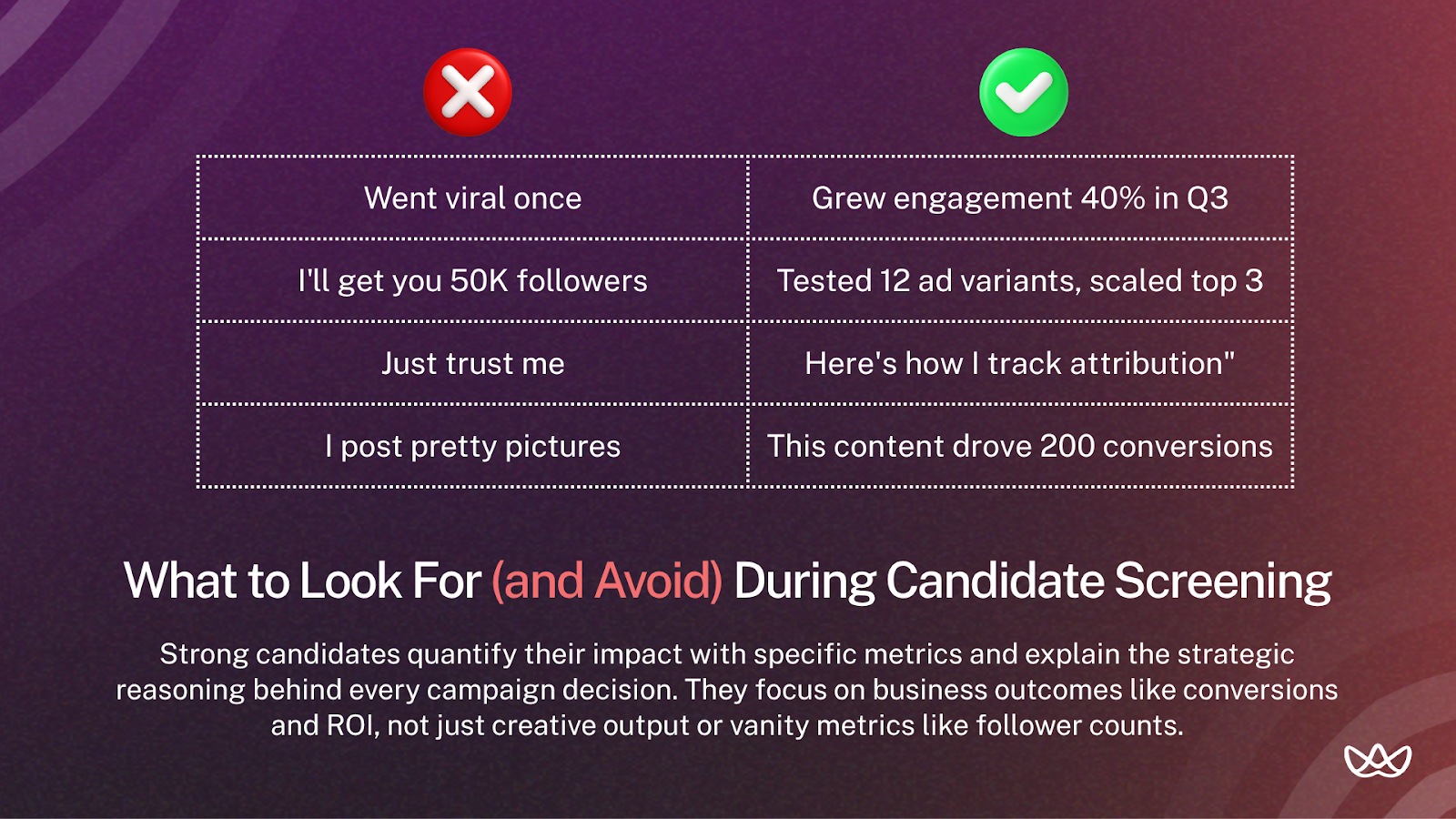
1. Hiring Only Based on Follower Count or Aesthetics
Large follower counts don’t always reflect skill. Some accounts grow in unrelated niches, and others may use shortcuts like purchased followers.
Focus instead on engagement and conversions. A smaller account with consistent engagement often performs better than a large one with low interaction.
2. Overlooking Strategy and Analytics Skills
Strong visuals aren’t enough. Your manager should explain why they chose specific formats, posting times, or messaging.
Look for references to A/B testing, audience insights, and performance tracking - these show a data-informed approach.
3. Not Aligning Expectations or KPIs Early
Set clear metrics before hiring, such as reach, engagement rate, or click-through rate. Regular check-ins help keep strategy aligned with business goals.
How to Identify Red Flags During Interviews:
Some mistakes are easy to spot if you know what to look for during hiring.
- Vague descriptions of past results without numbers.
- Too much focus on vanity metrics like follower count.
- Inability to explain the reasoning behind successful campaigns.
- Promises of viral growth or guaranteed follower increases.
- Limited knowledge of analytics tools or data interpretation.
Getting Started
Hiring a social media manager works best when you know exactly what you want them to handle. Start with clear goals and KPIs - engagement, leads, conversions, so performance is measurable from day one.
Focus on results, not just appearances. Look at past campaigns, ask how they solved problems, and see how they adjust when posts don’t perform. Avoid relying on follower counts alone.
Start hiring vetted social media managers in LATAM with Floowi to get real-time support during U.S. hours, cultural fluency, and measurable results at a lower cost. Book your free consultation today.
Frequently Asked Questions
How much should I budget for part-time vs. full-time social media managers?
If you’re considering part-time in LATAM, expect around $1,000 per month. Full-time roles usually fall between $1,800 and $3,000 depending on experience. In the U.S., full-time managers typically cost $4,500 to $8,000 per month.
Should I hire a generalist or a platform-specific manager?
If your brand is active on a few platforms, a generalist is usually enough. If one channel, like TikTok or LinkedIn, is a big focus, a specialist with deeper expertise can make a difference.
Do social media managers need video editing skills?
Yes. Short-form video drives most engagement on Instagram, TikTok, and YouTube Shorts. Managers don’t need to be professional editors, but they should be able to trim clips, add captions, and format content for each platform. This helps keep campaigns agile without waiting on external teams.
When should I hire full-time vs. freelance managers?
Full-time managers make sense when you post daily, manage multiple channels, or run regular paid campaigns. Freelancers are best for short-term projects, seasonal campaigns, or occasional content support. Many teams use a mix: a full-time manager for ongoing work and freelancers for special campaigns.
Can LATAM managers understand U.S. cultural trends?
Most can. Experienced LATAM professionals are bilingual and familiar with U.S. audiences. They understand trends, regional nuances, and what resonates online, which allows them to maintain authentic engagement without extensive oversight.
What’s the difference between a strategist and a manager?
A strategist plans the overall approach: which channels to focus on, the messaging, and performance goals. A manager executes the plan, creating and posting content, engaging the audience, and monitoring results. In smaller teams, one person often covers both, but larger teams benefit from splitting strategy and execution for clarity and focus.




